Spafax Conversations: Ann Willis
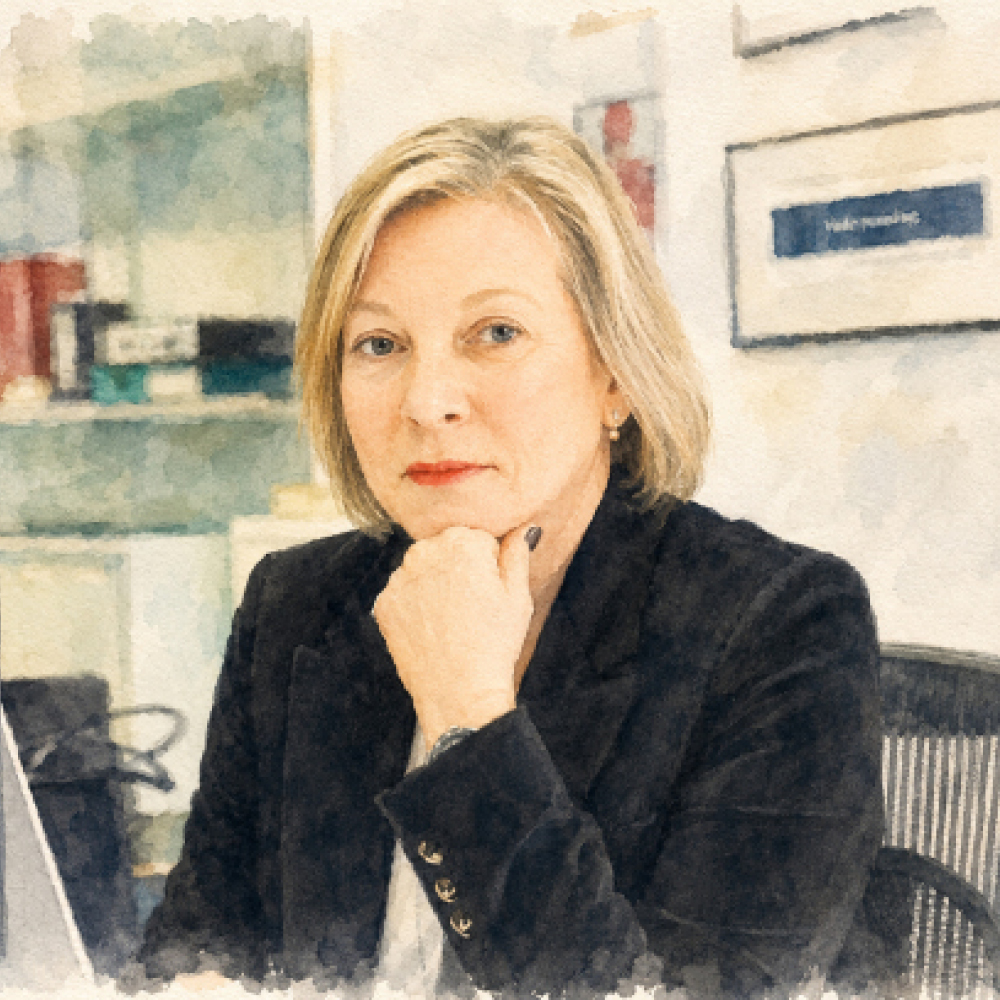
Celebrating Ann Willis: 33 Years at Spafax
After years of dedication, leadership, and meaningful contribution, it is difficult to capture the impact one person can have on a company and the people within it.
As Ann begins an exciting new chapter, her energy, passion, and influence continue to inspire those around her. Today, we raise a glass to Ann Willis, Spafax’s Chief People Officer, and celebrate this well-earned transition into the next phase of life, filled with opportunities, adventures, and time to enjoy the moments that matter most.
As we celebrate her remarkable career, we also celebrate the legacy she leaves behind and the exciting journey that lies ahead. On a sunny afternoon in London, over a lovely bottle of Albarino, Maryann Simson of Jetway Communications sat down with Ann to talk about her colourful career, her advice for women in business, and her plans for the future.
Maryann: Ann, thank you so much for making the time to chat with me today. Just for context – how long have you been at Spafax?
Ann: Thank you, Maryann, it’s my pleasure.
I’ve been at Spafax for thirty-three years. I started on a three-month temporary contract, then it got extended for another three months and then another. It’s a bit like Hotel California – you can check out, but I never left.
Before that, I worked on British Airways at Saatchi & Saatchi. I’d been living in France doing advertising, and I was looking for a production job. A friend of mine who was doing voiceovers for Spafax said, “You should try this company.” So I did, and that’s what happened. It was all coincidence and luck – very “sliding doors.”
Maryann: So that’s how you got to Spafax. Why did you stay for so long?
Ann: Because it always stayed interesting. So much has changed – technology, content, clients – it’s a very dynamic environment. I’ve done almost every job at Spafax, so I’ve been able to keep changing things up. I really love the people and the culture as well.
But there does come a point where you suddenly think, “Maybe it’s time to move on.”
Maryann: Well, after 33 years, that’s fair enough! Let’s talk about the evolution of your career at Spafax. What was that original three-month contract for, and what other hats have you worn?
Ann: The contract was because Spafax had just taken on the outsourced British Airways IFE contract. That was thanks to the founders, Duncan and Jeremy, who set up the deal. They thought, “This woman’s worked on BA – she could help us.”
I was basically doing account management: writing briefs and setting up systems so the client service function worked more like an advertising agency, but for inflight entertainment. I was trained in client service and knew the BA brand very well, so it all came together naturally.
Maryann: So you were acting as a liaison between the more technical elements of the company and the client?
Ann: Exactly – and the creative side too. Back then, we did a lot of original production, which I loved. We produced two monthly magazine-style programmes: one for outbound flights and one for inbound flights.
It was really fun. We’d travel everywhere, oversee shoots and post-production. Coming from advertising, where you make ads, this felt similar – except we were making entertainment content and were far less constrained.
And in those days there was only one main screen on the aircraft. Everyone had to watch the same flickering screen in the sky and get what they were given!
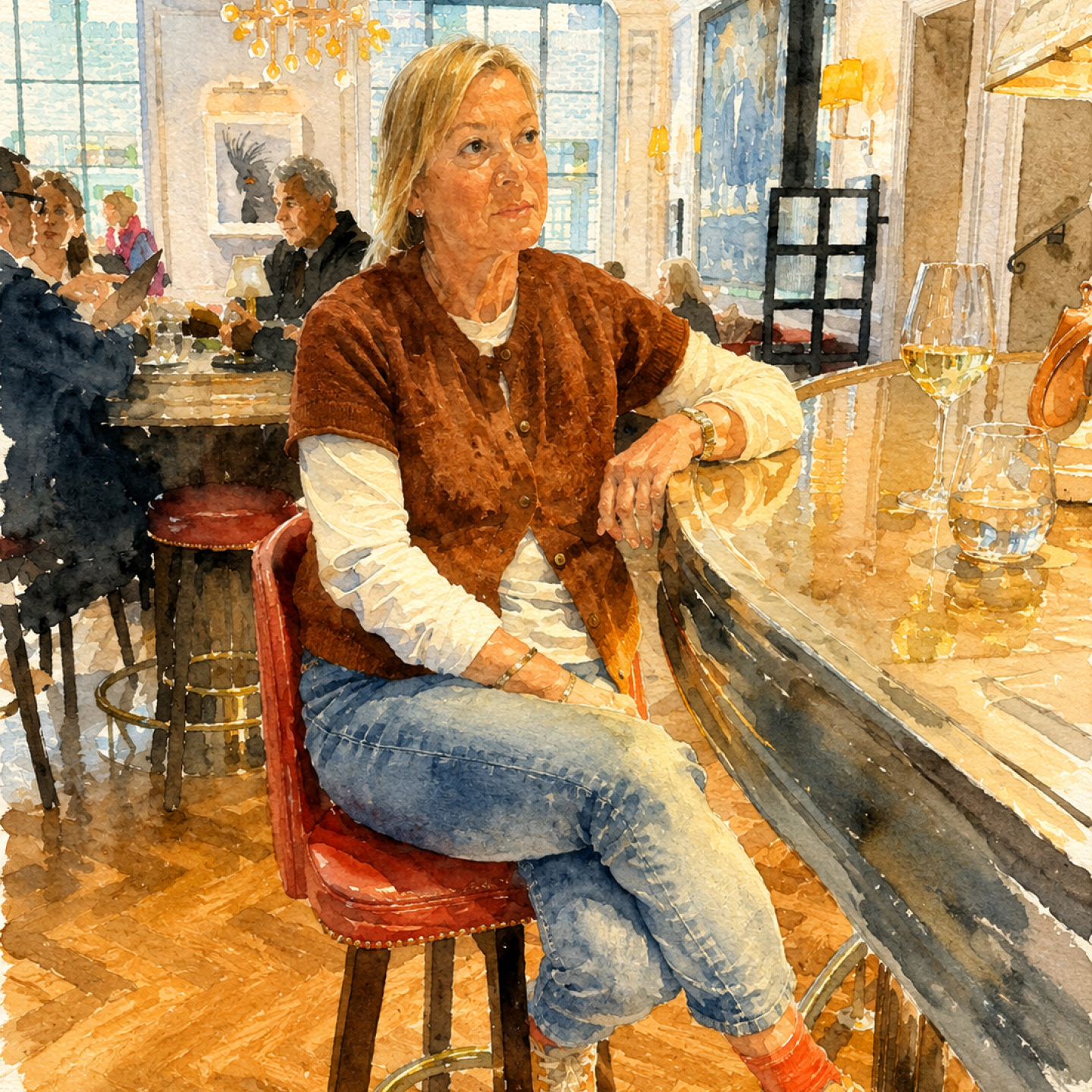
Maryann: It still works!
Ann: Somehow, yes. We used to create all the pre-roll content, news segments, magazine programmes – all delivered on physical tapes. We had to manage the logistics of getting those tapes onto the aircraft. At the time, we thought it was incredibly complicated.
Of course, now it’s vastly more complicated technically, but that’s what’s kept it interesting. We’ve gone from a cabin crew member pressing “play” on a tape to huge digital VOD systems.
The next big shift will obviously be streaming – both content and advertising. That’s going to be another game changer.
At the heart of it, though, the goal is still the same: entertain people, give them a good experience, help build loyalty to the airline brand.
What I find fascinating now is the question airlines face with streaming: are they still curating and hosting the entertainment experience, or are they simply enabling passengers to access Netflix and their own apps? That’s a really interesting strategic question.
Maryann: That segues nicely into how the industry itself has evolved. Is there anything else that stands out to you?
Ann: Absolutely. When we started with BA, first-class passengers literally had a library of videotapes in their seats. Cabin crew would hand them out – like Blockbuster in the sky.
In business class there were eight channels, which at the time was incredibly advanced. If the crew pressed the wrong button at the wrong time, everything would go out of sync – with potential chaos.
A huge turning point came with our client Patrick Brannelly at Emirates. He really pushed the idea of becoming “Sky TV in the sky.” He pioneered the move toward massive content libraries and elevated entertainment as part of the overall airline experience.
Originally, inflight entertainment was almost treated like catering – loading meals onto the plane, loading tapes onto the plane. But over time, customer experience, loyalty and brand engagement became central.
Maryann: Culturally there’s been a huge shift too. Flying is much more accessible now, and audiences are far more global and diverse. There’s greater sensitivity around content, and more choice than ever.
Ann: Definitely. But in a way, the response has been to make everything available and let passengers choose for themselves.
What’s changed most is that entertainment has become much more democratic. On BA, first-class passengers got the most content, then business class, while economy passengers – who arguably needed it most because they weren’t sleeping comfortably – got very little.
Now everyone throughout the aircraft has access to the same huge selection. That’s been a really positive change.
The challenge now is discoverability – helping passengers find hidden gems instead of everyone just defaulting to the biggest blockbuster movie.
Maryann: Hearing all this, it sounds quite glamorous at times – premieres, Hollywood, travelling the world. A lot of people would probably see that as the dream job.
Ann: It was fun. I enjoyed going to Los Angeles and spending time with the studios because I absolutely love film and television.
As my career progressed, I worked on more airlines, more pitches, more new business. There was a lot of travel – sometimes at very short notice.
You’d suddenly hear, “You need to go to Dubai tomorrow,” or “You’re flying to Hong Kong for lunch with a client.”
I got to do amazing things: going to Australia over New Year on a familiarisation trip for Qantas, filming in Antigua for the BA Executive Club. There were definitely some fantastic experiences.
Eventually I became Managing Director of the IFE business, and later moved into a more internally focused executive role as Chief People Officer. That became more about people, systems, culture, salaries, reviews, appraisals and making sure the company worked well globally.
I actually enjoy it because I really love Spafax and its culture – and I genuinely enjoy interviewing people.
Maryann: How do you feel about being interviewed yourself?
Ann: I don’t mind it! I always tell hiring managers that interviews aren’t just about “buying” the candidate – we also need to sell Spafax to them.
I like being the person who can step in if the interview isn’t flowing well, or if we haven’t explained the company properly.
Maryann: What’s the least glamorous part of your work?
Ann: Honestly? Probably all the back-end operational stuff: admin, detail, systems, processes. It’s vital, but it’s not glamorous.
I much prefer the front-end side: nurturing people, content, relationships and being proud of our teams and our output.
Maryann: What do you think people misunderstand about the industry?
Ann: I think people assume inflight entertainment happens by magic!
When you tell people you work in the industry, they often say, “Oh, I thought that just appeared on the plane.” They don’t realize there’s an entire business and huge operational infrastructure behind it.
We’re very invisible – until something goes wrong.
Maryann: Let’s talk about work-life balance. Is balance even real?
Ann: People started talking about it much more during Covid. I came from the advertising world of the 1980s, where you basically weren’t supposed to have a personal life at all.
I carried that mentality with me for quite a long time – the whole “lunch is for wimps” culture.
Over time, though, I’ve become much more sympathetic to the realities people face, especially parents and single parents. Balance and wellbeing really matter.
At the same time, one of my core values is fairness. As a manager, you have to balance flexibility with fairness to the people putting in extra hours as well.
Maryann: What’s a decision that changed your life?
Ann: Probably moving from the client-facing IFE role into a broader senior executive position focused on the business itself.
Niall asked me to do that role after I came back from sabbatical, and I realized it was time.
That shift made me much more strategic and business-focused, rather than purely focused on customer experience and client service.
It changed the way I thought about leadership – making difficult decisions for the overall health of the company and the wellbeing of the people in it.
Maryann: So you learned more about nurturing a healthy company, rather than just keeping customers happy?
Ann: Exactly. Sometimes those decisions are difficult, but I found that really interesting.
Maryann: Is there a creative influence or personal experience that’s affected you most deeply?
Ann: Being in advertising with the ‘anything is possible’ attitude was incredibly liberating. But one thing I will say about my experience is that when I started at Spafax, it was very much a boys’ club and very logistically focussed – like the army. We even had a unit called Squadron!
There was definitely a “You’re female, can you make the tea?” mentality at times. Advertising was a very sexist industry back then, and early Spafax reflected a lot of wider societal attitudes.
That has changed enormously. Society has clearly changed. Things are fairer now, and behaviour that was once considered normal simply wouldn’t be acceptable anymore.
I think younger generations probably wouldn’t fully appreciate some of the things women had to put up with at that time.
It wasn’t necessarily about individuals being malicious – it was just the culture of the era. But it could still be difficult to feel fully heard as a woman in business back then. I think women today are much more able to speak up and be listened to.
In the 1980s and 1990s it was definitely more of a struggle. I think people sometimes forget that now.
Maryann: Do you think women are still punished for being too confident?
Ann: Not really – not anymore.
I’m a qualified coach, and I’m particularly interested in helping younger women progress in their careers. I always tell them: speak up, don’t suffer in silence, don’t take things personally, and have a plan.
I don’t think I did any of those things when I was younger. In some ways, I was just lucky.
Maryann: I remember asking for my first pay rise at my first proper job – and I cried while I was doing it.
Ann: I’d also say: if possible, don’t cry at work.
That sounds harsh because I’ve cried at work, and pretty much everyone has at some point if they care. But it doesn’t help the cause and it can reinforce bad stereotypes. When it does happen, it’s often about money or feeling unfairly treated. I remember once having a salary discussion with some people who will remain nameless. By the time we had the meeting, I was upset and already knew I was going to resign.
My advice would be: always have an exit strategy – and try not to cry!
Maryann: Let’s stay on the career side of things. What’s next for you? What are you still hungry for?
Ann: That’s a very good question.
I’m still hungry for knowledge. I want to take courses and do things purely for myself. I’d love to do some slow travel – I’ve become completely institutionalized into taking one or two-week holidays and rushing back to work.
I want to explore the world more slowly and more thoughtfully.
I also want to reconnect with creative things. My degree was in Drama and English, and I don’t really use that side of myself anymore. I love literature and artistic projects, so I’d like to spend more time on those.
I’ve also moved to a village in the countryside, and I want to get more involved locally and do some volunteering. That feels like a good way to give back and be in the community.
The hard part is deciding what to do first. You can become overwhelmed by all the possibilities and freedom!
Maryann: What’s something you’ve changed your mind about recently?
Ann: Constantly changing my mind about house renovations.
I’ve had decorators, builders and carpenters in, and I keep ringing them back saying, “Is it too late to change it?”
What’s interesting is designing a home entirely for yourself, rather than constantly thinking about resale value or practicality for someone else. But I do get conflicted and flip-flop.
What I’ve learned, though, is that almost everything can be changed. Nothing is permanent.
Maryann: Okay, let’s do some fun questions. What’s something beautiful you’ve noticed recently?
Ann: Apart from the countryside in East Sussex, where I now live?
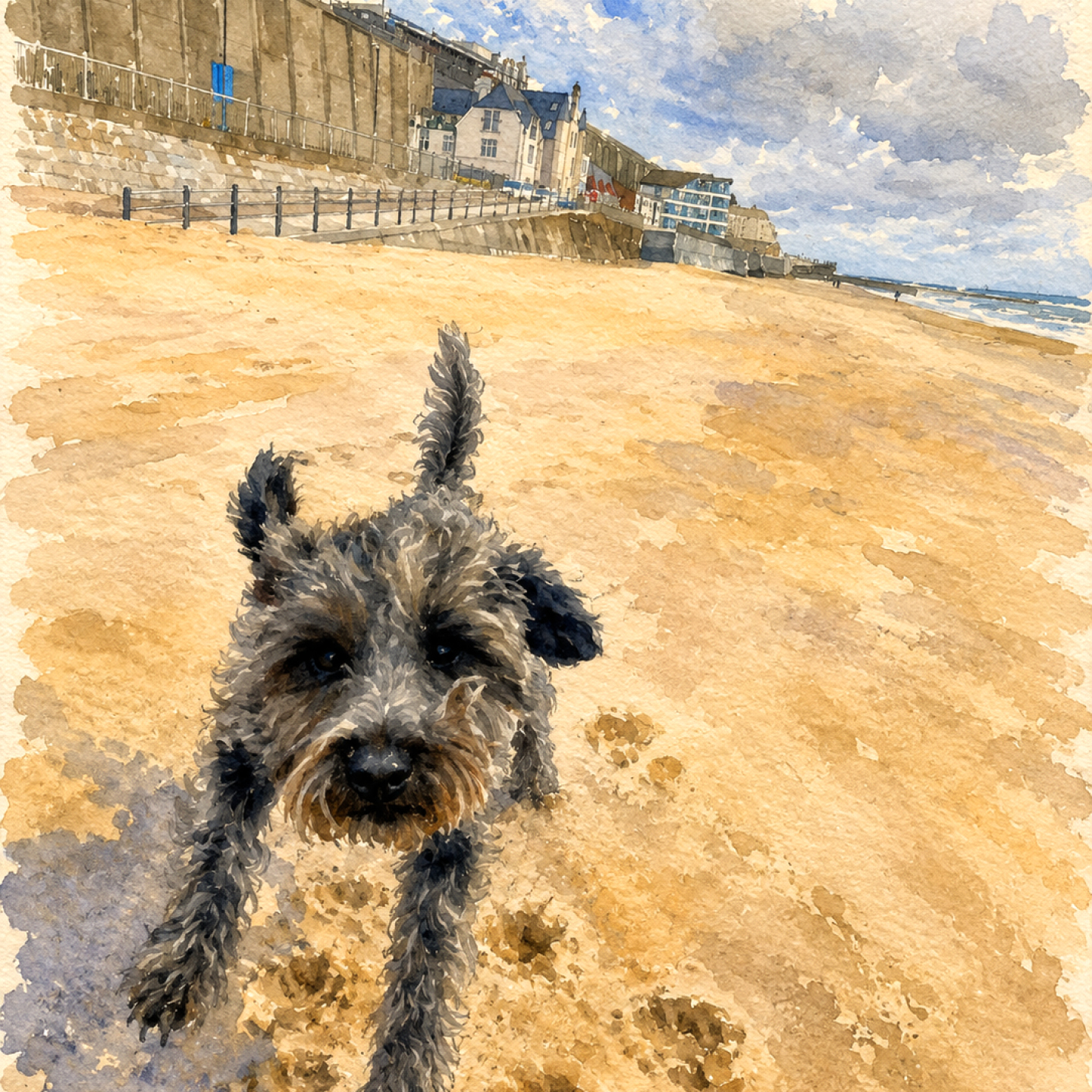
Honestly, probably my little dog Mabel. When she looks at me deeply, pretending to gaze into my soul when really she just wants food – it’s incredibly cute.
Then, of course, she gets whatever she wants.
Maryann: I completely understand. My dog is genuinely one of the most beautiful things in my life.
Ann: It sounds corny, but it’s true.
Maryann: What shaped you most growing up? What kind of child were you?
Ann: Going to boarding school at seven years old shaped me enormously – not necessarily in a good way.
For some children, boarding school is brutal. You learn very quickly how to survive.
I was a very sensitive only child, and suddenly I was thrown into that environment. It definitely toughened me up and gave me a thicker skin.
I did eventually do very well there, but the early years were hard.
Maryann: What’s the silliest mistake you’ve ever made at work?
Ann: Mistake? Mistakes are for wimps!
More wine, Maryann!